Learn Lifecycle

Open source · free for everyone

Put what you know into the game.

Learn Lifecycle teaches the judgment calls of lifecycle marketing on screens built like the real tools. The best lessons come from people who do the job. Bring a story, an idea, an afternoon or a weekend.

Play the game
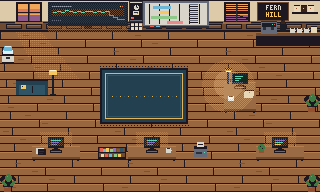
The Fernhill office in pixel art, with the crew at their desks
DanaWe're hiring. The pay is your name in the credits.
3desks: analytics, data, testing
93lessons and counting
0accounts or downloads to play
MITfree to use, change and share

Four ways in

Pick the one that fits your week.

From least effort to most. Every one of them makes the game better, and only the last needs code.

1

Tell me what you think

5 minutesNo account

Play any part of the game and press Make a suggestion in the top corner. Pick Bug, Feature idea or Feedback and write a line or two. The box notes where you are in the game for you. "This step confused me" helps as much as a bug report.

2

Talk it through with me

15 to 30 minutesA DM or a Zoom call

The best levels come from real work. Message me if one of these sounds like you:

  • You have a marketing story: a launch that broke, a flow that quietly stopped working, a test that fooled everyone.
  • You found something clever at work: a segment, a test setup, a report that saves you time every day.
  • You teach this, or you're learning it and remember what was hard.

We talk it through and I turn it into a level. You get credit in the game, by name or not, your call.

3

Send a prompt request

15 minutesNo coding

Describe one change the way you'd ask an AI coding agent (Claude Code, Codex, Cursor) to make it. I read every one and choose whether to run it. If I do, I link the change back to you.

or write it on GitHub →
4

Build it yourself

An evening or a weekendGitHub

Fork the repo and build a new level, a new step, a fix or a whole game mode. Then open a pull request that says what you built, with a review link that opens the game right at your change.

Building with an AI agent? Point it at AGENTS.md first. It knows the layout, the rules and what to hand back.

From your desk to the game

How a story becomes a level.

Most of the game started as something that happened at work. Yours can be next.

1

You tell it

In a DM, a call or a prompt request. What happened, what you checked, what you learned.

2

It becomes a case

Made-up numbers, the same shape as the real thing. One new idea per step, practised until it sticks.

3

Players learn from it

Everyone who plays it learns what took you a bad week to find out. Your name goes in the credits.

with thanks to you

Where to help

Seven things the game needs.

Each one opens a list of small, clear pieces. Pick one, say so in a comment, and go. You don't need to be a developer: plenty of these need a marketer's eye, a sketch or an idea.

Want something small?

Pieces marked good first issue take an evening or less. Pieces marked no code needed need only your eyes and your opinion. Everything is on the project board too.

Open the project board →

For builders

Everything you need to send a change.

Run it on your computer

Nothing to install, no build step. You need Python 3 or any static web server.

git clone https://github.com/YOUR-NAME/learn-lifecycle cd learn-lifecycle python3 -m http.server 8000

Then open http://localhost:8000 and reload to see each change.

Building with an AI agent

Tell your agent to read AGENTS.md before it touches anything. It covers where everything lives, the rules below, what to test, and what to put in the pull request, review links included.

# paste into Claude Code, Codex or Cursor Read AGENTS.md, then help me build one change.

Review links

A review link is a full web address that opens the game right at the thing you changed, so the reviewer clicks once and is there. Put one in every pull request, written out in full. They use a separate practice save, so they never touch anyone's progress. Try these:

House rules

Six rules every change follows.

They're why the game teaches well. More detail in CONTRIBUTING.md.

01One new thing per stepTeach one idea, practise it alone, then join it with what came before.
02Every screen asks for a callNo screens that are only reading. The player decides something every time.
03Looks like the real toolsKeep the tools' layouts, so practice carries straight over to work.
04Made-up everythingMade-up numbers, people and stores. No real company's data.
05Nothing to sign up forNo AI calls, no accounts. The game runs entirely in the browser.
06Plain wordsShort sentences. Say what to do, not how clever it is.

The office is open

Pull up a chair.

Five minutes of feedback or a whole new desk. Whatever you bring, someone learning lifecycle marketing will be glad you did.

Say hi on LinkedIn